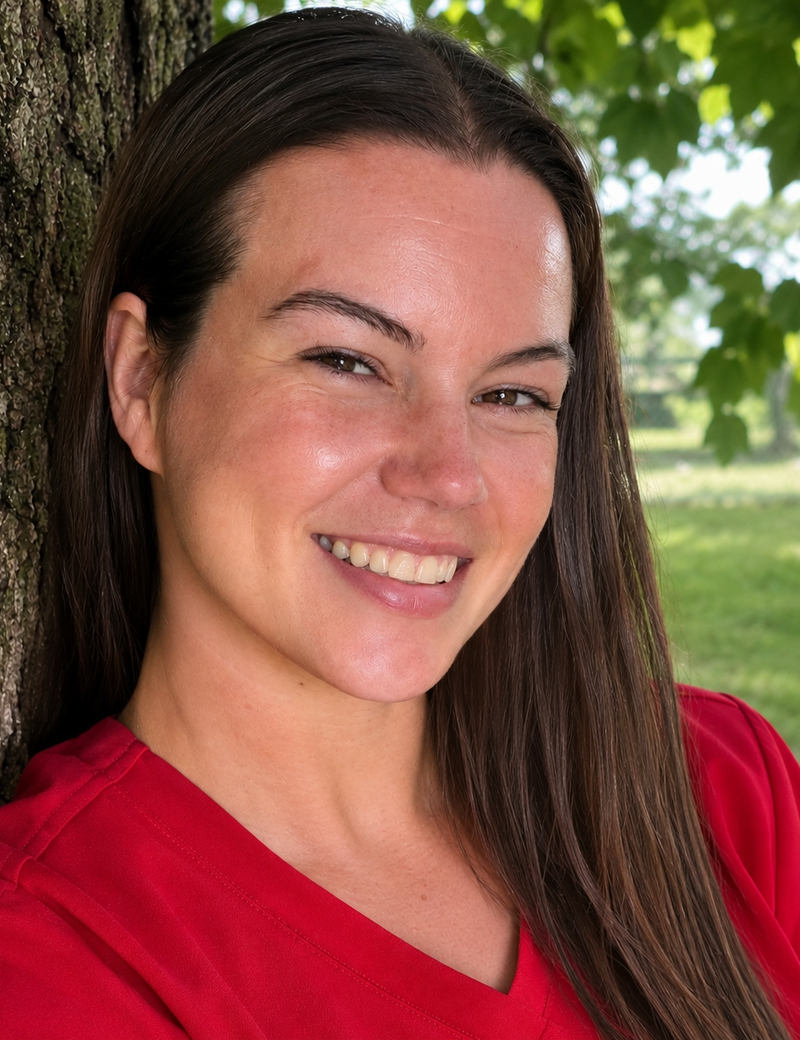
Rachel Fulton
Botanical Waxing, Custom Botanical Facials, Full Body Treatments and Infrared, Functional Nutritional and Holistic Wellness Appointments, Herbalism & Personalized Herbal Wellness, Restorative Massage and Near Infrared+ Red Light, Wildflowers Of Eden Specials
At Wildflowers of Eden, Rachel brings together holistic esthetics, traditional herbalism, functional nutritional counseling, and whole-person wellness consulting. Her approach is grounded in the understanding that our bodies are interconnected and that each person’s history, experiences, and individual needs deserve thoughtful consideration.
Her path into this work is deeply personal. Through her own experiences with serious illness and the challenges she has walked through with her children, Rachel spent years searching for a deeper understanding of the human body and the many factors that influence our well-being. Those experiences helped shape both her education and the way she works with others today.
With a background in social work, herbalism, functional nutrition, and esthetics, Rachel brings together compassion, traditional plant knowledge, and an understanding of full-body systems. Her consultations may explore nutritional patterns, lifestyle, environmental influences, personal history, and existing bloodwork, functional testing, or genetic information when relevant to an individual’s wellness goals.
Food as medicine and whole-plant herbalism are central to her philosophy. She values nourishing the body through whole foods, thoughtfully selected herbs, and practical lifestyle changes, incorporating supplements when they serve a meaningful purpose. Rather than approaching everyone with the same recommendations, Rachel considers the individual and the connections between different areas of their well-being.
That same attention carries into her holistic spa services. Located inside Headbangers Salon in Pendleton, Indiana, Wildflowers of Eden offers customized botanical facials, body treatments, restorative massage, red and near-infrared light therapy, and botanical waxing. Rachel incorporates Botnia’s professional botanical skincare alongside her own handcrafted Wildflowers of Eden herbal preparations, bringing her knowledge of plants and skin care together in the treatment room.
Her Christian faith is the foundation of Wildflowers of Eden and guides the way she approaches her work. She believes every person has inherent worth and deserves to be met with compassion, patience, and genuine care. Her experiences have taught her the importance of hope, even when the path forward is uncertain.
Whether you’re visiting for a restorative spa experience, seeking individualized herbal support, or exploring your wellness through functional nutritional counseling, Rachel’s desire is for you to feel heard, respected, and encouraged.
The place where faith, hope, and wellness come together.
Spa services are available in Pendleton, Indiana. Herbal, functional nutritional, and wellness consultations are offered primarily virtually, with in-person appointments available by arrangement.
My Journey
The story behind Wildflowers of Eden and why I will never stop asking questions.
Before I ever became an herbalist, a licensed esthetician, or a functional nutritional counselor, I was a teenage girl lying in a hospital bed, in so much pain that I needed IV morphine just to get through it. I was young. Far too young, according to some of the doctors, to have endometriosis.
Except I did. I had inflammatory endometriosis, and it was already affecting my body in ways I couldn't begin to understand at that age. I wasn't imagining the pain. I wasn't exaggerating it. My body was trying to tell us something was terribly wrong, and I was depending on the people around me to understand what that meant.
I had no idea then that this would be the beginning of a medical journey that would take so much from me. Looking back now, with the education and understanding of human physiology that I have today, I find myself asking questions I never would have known to ask back then.
What was driving that degree of inflammation in someone so young? What was happening within my immune system? How were my hormones, nervous system, nutritional status, and other biological processes being affected? What else should we have been looking at? I cannot say that answering those questions would have prevented everything that followed. But I do wonder how different my life might have been if we had known to ask them.
My teenage years were not what I had imagined they would be. While other girls were experiencing the ordinary things that come with growing up, I was learning about pain medications, hospital rooms, procedures, and the frightening reality of having a body that wasn't functioning the way it should, and no one able to tell us what is actually going on. My gut was a mess at the same time.
My reproductive health was already so complicated that I underwent surgery and needed fertility medications at a very young age to become pregnant. Even that part of life, something that should have been filled with excitement and hope, came with medical challenges and uncertainty.
But God had already placed someone extraordinary in my life.
I met my husband when we were teenagers, and he has walked through so much of this with me. He knew me before the years of diagnoses, before so many of the surgeries, and before illness became such an enormous part of our everyday lives. He has watched me suffer in ways no husband should have to watch his wife suffer. He has carried burdens with me that neither of us could have imagined when we were young.
There were times when I needed him to be my strength because I had very little left. And while I am grateful beyond words that God brought us together so young, I also look back and realize how much was placed on both of us before we had even really begun our adult lives.
We were trying to build a family while my body was struggling to function. I was becoming a mother while still searching for answers about my own health. And today, knowing what I know about nutrition, metabolism, and the importance of biological cofactors, that part of my story weighs heavily on my heart.
I wonder what was happening inside my body while I was carrying my children.
Were my nutritional reserves sufficient? Were the nutrients and cofactors needed for normal cellular processes available in the amounts my body required? How might chronic inflammation, illness, and the demands being placed on my body have influenced my pregnancies?
Those are questions I didn't know to ask when I was young. I don't pretend to know exactly how my health affected my children's development. Pregnancy and childhood development are extraordinarily complex, and I would never want another mother to believe that her child's challenges must have been caused by something she did or didn't do. But I do know that maternal health matters. Nutritional status matters. Cellular function matters.
And I wish I had understood more about those things when my children were growing inside me.
By the time I was 23 years old, I had undergone a complete hysterectomy, losing my uterus, ovaries, and cervix. Twenty-three.
I think about that age often. I was so young to have already experienced that much pain and that many medical interventions. And yet, even after losing those organs, my health struggles did not end. They continued. Over the years, my medical history grew into something I could hardly keep track of myself.
Endometriosis. Autoimmune and inflammatory illness. Treatment for lupus. Connective tissue complications. Secondary adrenal insufficiency. POTS. Raynaud's. Significant vascular problems. Neurological complications. Serious infections and sepsis.
I have had my gallbladder and appendix removed. I have undergone vein stripping in both legs, required an iliac vein stent, and experienced complications involving major blood vessels. I've had a feeding tube placed and later removed. I've dealt with liver tumors, residual endometriosis, and ongoing problems involving multiple body systems.
I have also experienced where my health got so severe that I ended up in a coma. And those are only some of the things my body has been through.
There were surgeries, procedures, hospitalizations, medications, and treatments. Some helped temporarily. Others left me with more questions, additional complications, or problems that I still live with today.
I followed recommendations. I tried treatments. I kept appointments. I went from specialist to specialist. But so often, instead of getting better, I seemed to be getting worse. At times, it felt as though every new problem was being approached on its own, without anyone being able to explain how all of these things might be connected. One specialist focused on one system. Another focused on something completely different. Another medication was added. Another procedure was discussed.
Meanwhile, I was the person living inside the body experiencing all of it together. I wasn't a collection of separate organs. I was one person, and something was happening throughout my body that I desperately wanted to understand. Today, one of the things I live with is a completely occluded left brachiocephalic vein, with my circulation relying on collateral pathways.
And that is not a small thing.
After everything my body has endured, including so many medical treatments and vascular complications, I cannot help questioning how much of the damage might have been avoidable. I wonder whether some of the procedures and organ removals could have been prevented, or whether different information earlier in my life might have changed the course of my care. I cannot go backward and prove what would have happened differently. But I have to live with the consequences of what did happen.
Some of those consequences cannot simply be reversed with better nutrition, herbs, another medication, or another surgery. There are things I cannot get back. And that is one of the hardest parts of my story.
As difficult as the physical pain was, there was another kind of pain that came with it.
Not being believed. Before many of my autoimmune and other medical conditions were finally identified, I spent years trying to convince people that something was physically wrong. I knew what I was experiencing. I knew the pain was real. I knew the changes in my body were real. I knew that something was happening that I could not explain. But there were times when my symptoms were questioned or dismissed, and the attention seemed to turn toward whether what I was experiencing was somehow in my head.
Over time, that does something to a person.
You begin questioning how to describe your symptoms. You wonder whether you should even bring up something new. You find yourself rehearsing what to say before an appointment because you are afraid of how it will be received. And when those doubts extend beyond the examination room, the damage becomes even more personal. There were times when the way my health was being characterized influenced how people close to me understood what I was experiencing. Even my own family was affected by the doubts surrounding my illness.
Imagine being desperately sick, trying to find someone who can explain what is happening, and then feeling as though you have to defend the reality of your suffering to the very people you need beside you. I experienced barriers to care and felt, at times, as though the perceptions formed about me made it harder to be heard when I sought help again.
And even after diagnoses began confirming that I had serious physical conditions, the emotional damage from those years didn't simply disappear. I am not sharing this because I believe every practitioner I encountered failed me. There were people who helped me, and I am grateful for them. I also understand that medicine is complex and that not every condition is easy to recognize. But there is a difference between not having an answer and making someone feel as though they are the problem because an answer hasn't been found.
I know that difference because I have lived it. And I never want someone sitting across from me to feel that they have to prove they deserve to be listened to.
If my own medical experiences changed the way I saw the world, becoming a mother to two children with complex health needs changed it even further. Both of my children began experiencing health challenges when they were infants.
What was so difficult to understand was that I could see similarities in some of their symptoms, even though their diagnoses and medical circumstances were different. And some of what I saw reminded me of things I had experienced myself. How could we have so many overlapping concerns and yet such different explanations?
I knew that sharing symptoms didn't necessarily mean sharing the same condition. But I couldn't stop wondering whether there were underlying biological processes we weren't fully understanding.
My daughter, Alana, was identified through newborn screening as having Duarte galactosemia, a genetic metabolic condition involving the way the body processes galactose.
I knew she had a metabolic disorder from the very beginning of her lifer a few weeks in when the state called, after I had just told the doctor she seemed lethargic and something was wrong.
At the time, I thought I understood what that meant. I understood the diagnosis as it had been explained to me. I understood the recommendations we were given. But I didn't yet understand the much larger picture of metabolism or the many processes that must work together for the human body to function.
As Alana grew, she continued coming to me with concerns. Pain. Fatigue. Weakness. Difficulty feeling well. Things that affected her everyday life and the activities she wanted to enjoy. And there were times when the explanation we received seemed to be that this was simply how things were going to be for her. But I kept asking myself, why?
Even if a genetic condition cannot be changed, why wouldn't we continue looking at what else might be contributing to how she feels? Could there be nutritional needs, separate medical concerns, or other areas of her health that deserve closer attention?
I now understand that having a genetic diagnosis doesn't mean every symptom a person experiences must automatically be attributed to that diagnosis. It also doesn't tell us everything about their nutritional needs, environment, or individual physiology.
I cannot change Alana's genetics. But I can continue learning about her unique biology, advocate for appropriate medical evaluation, and look for ways to support her health and quality of life. I want her to have the opportunity to feel as well as she can, to understand her body, and to know that her concerns deserve attention.
My son's story has been different, but no less life-changing. Jonah's journey through autism, communication challenges, sensory differences, and his own complex health needs has taught me things I could never have learned from a textbook alone.
There was a long time when he wasn't speaking. Today, he speaks in full sentences. I don't take that for granted. His progress has come through years of support, growth, persistence, and learning about his individual needs. Through research opportunities and the people we connected with along the way, I began looking more deeply into his genetics, biochemical pathways, metabolism, nutritional status, and other aspects of his physiology.
We began asking questions that went beyond a diagnosis alone. Why might certain nutrients be especially important to a particular biological pathway? What happens when an enzyme doesn't function as efficiently as expected? How does the body maintain antioxidant defenses? What roles do digestion, absorption, and cellular energy production play?
And how do we interpret all of that carefully, without assuming a genetic variant automatically explains a symptom? It opened an entirely different world of learning for me.
I began seeing the importance of understanding how individual biological systems interact rather than simply looking at one symptom at a time. My children are two different people.
They have different diagnoses, different strengths, different needs, and different ways of responding to things. I cannot approach them as though they are biologically identical simply because they are siblings or because some of their symptoms overlap.
And that lesson has become central to how I approach my work with others.
During my search for answers, I was fortunate to connect with researchers who helped me begin understanding parts of my own physiology in ways that had never been explained to me.
For years, I had been told the names of diseases and conditions. But I wanted to understand what was happening underneath those names. Why was my immune system attacking my own tissues? What was contributing to the inflammation? Why were so many seemingly unrelated systems involved? What could we learn from the way my body was functioning as a whole? These researchers helped me begin connecting pieces of my medical history through a deeper understanding of human biology. It wasn't one miraculous answer that explained everything. It was learning how much our biological systems depend on one another.
I began exploring the relationships between immune signaling, inflammation, genetics, metabolism, nutrient availability, hormones, neurological function, gastrointestinal health, and cellular processes. I learned that nutrients are not simply things we take because they are supposed to be good for us. Many vitamins and minerals act as cofactors, helping enzymes carry out essential chemical reactions. Proteins, enzymes, and metabolic pathways are constantly interacting to maintain the body's normal functions. Our bodies need the appropriate building materials to carry out those processes. And the presence of a nutrient in someone's diet doesn't necessarily tell us everything about its absorption, utilization, or their individual needs.
I became particularly interested in understanding these relationships through the lens of genetics, biochemical pathways, and the body's ability to maintain balance. But I also learned something equally important: biology is rarely as simple as identifying one gene, one deficiency, or one abnormal laboratory result and declaring it the explanation for everything.
Genetics can provide useful information, but it must be interpreted in context. Laboratory testing can offer clues, but results must be considered alongside the person's medical history and clinical circumstances. Symptoms matter, but similar symptoms can have very different causes.
There was so much to learn, and for the first time in a long time, I felt as though I was developing the knowledge to ask more meaningful questions. Not just about my children.
About myself, too.
I wish I could say that going back to school was simply the next exciting step in my professional career. The reality was much more personal. We had already poured so much into trying to find help for our family's health. The costs of consultations, evaluations, treatments, and pursuing answers had become overwhelming. Eventually, I reached a point where I simply couldn't afford to keep paying for all the help and guidance I was seeking.
And I still needed to understand what was happening. My children still needed me. I still had a body full of complicated medical problems and questions that were not going away. So, I made the decision to go back to school and deepen my own education.
I already had a background in social work, which had taught me a great deal about people, families, advocacy, and the importance of understanding someone's life beyond what is written in a record. But now I wanted a much deeper understanding of the physical body.
I pursued education in herbalism, became a licensed esthetician, and completed my Full Body Systems training through the Functional Nutritional Alliance to become a Certified Functional Nutritional Counselor. I wanted to understand human physiology from a whole-body perspective. Not just the digestive system. Not just hormones. Not just the immune system or nervous system.
I wanted to understand how these systems influence one another, how nutritional factors contribute to their normal function, and how to evaluate information thoughtfully when the picture is complicated. I studied the role of digestion and nutrient absorption, metabolic pathways, endocrine regulation, immune function, cellular health, and other processes that support the body. I continued learning about herbal constituents, traditional botanical applications, modern research, and the importance of safety and individual responses.
And I kept returning to the same thought. I wish someone had explained more of this to me when I was young. I wish I had known what questions to ask. I wish I had understood the possible long-term consequences of some of the decisions being made about my body. I wish I had understood how much one system could influence another. There are so many things I wish I had known. I cannot change what happened to me. But I can use the knowledge I have gained to approach other people differently.
Wildflowers of Eden wasn't born out of a desire to create another wellness business. It came out of years of illness, motherhood, loss, research, faith, and a very personal understanding of what it means to need help. I know what it feels like to have a complicated history. I know what it feels like to walk into an appointment carrying years of medical records and still struggle to explain everything that has happened. I know how exhausting it is to tell your story again and again.
I know what it feels like to spend money you barely have because you're hoping the next appointment, the next specialist, or the next treatment might finally help. And I know what it feels like to leave with more questions than you came with. That has shaped the way I work with my clients.
When someone comes to me for herbalism, functional nutritional counseling, or holistic wellness consulting, I want to understand the person, not just the reason they booked an appointment.
I want to know their story.
When did things begin changing? What was happening in their life at that time? What have they been diagnosed with? What has already been evaluated? What medications, treatments, or supplements have they tried? What helped? What made things worse? What are they eating? How are they sleeping? What is happening with their digestion, energy, and daily functioning?
Are there patterns that deserve further consideration? Are there questions that would be helpful to bring back to their physician or another qualified professional?
I want to look at the information they already have and understand what it can tell us, while recognizing what it cannot. And when something is outside my knowledge or professional role, I want to recognize that rather than pretend otherwise. I don't practice medicine. My work is in herbalism, functional nutrition, and functional wellness consulting, including consulting on genomics and adding holistic wellness support.
But that doesn't mean I stop learning, researching, or working to understand the science behind what I do. I take my responsibility to the people who trust me seriously. If I need to spend time reading research, reviewing information, or consulting with another knowledgeable professional, I will do my best to pursue the understanding that is needed. I value relationships with other practitioners who bring different experiences, clinical knowledge, and perspectives to the table.
I believe good collaboration can be incredibly valuable, especially when a person's needs are complex. I don't believe one individual has every answer. I certainly don’t. And after everything I've lived through, I am very careful about the difference between what we know, what we suspect, and what we are still trying to understand. I will not promise someone that an herb, supplement, diet, or wellness approach is going to resolve a complicated medical condition. But I will put genuine effort into understanding their goals, researching appropriate supportive options, and helping them make informed decisions within the work I am qualified to provide.
I want my clients to understand why we are considering something. What is the intended purpose? What does the evidence suggest? What are the potential limitations or safety concerns? How will we know whether something is actually helping? Because I remember being young and having decisions made about my body that I didn't fully understand. I remember what it was like to be frightened, sick, and dependent on someone else to explain what was happening.
I never want to lose sight of that.
The vision behind Wildflowers of Eden extends beyond consultations and appointments. My husband and I have invested so much of what we have into our property and the future we hope to build there. My dream is to develop the Wildflowers of Eden Wellness Center, a place where the different areas of my work can come together in a peaceful, thoughtful environment.
Our property is also part of my work as an herbalist. We do not spray our land with pesticides or herbicides, and many of the plants I work with come from herbs grown or gathered on the property. There is something deeply meaningful to me about knowing the land, caring for the plants, understanding their traditional uses, and being involved in the process of creating botanical preparations.
I love the science behind herbalism, but I also love the connection to the natural world that comes with it. I value thoughtful botanical formulations, whole foods, individualized nutritional education, and a deeper understanding of the body. And I value the restorative side of wellness just as much. My work in holistic esthetics, botanical skincare, massage, and other spa services is another part of that vision. After living through so much physical pain and stress, I understand how meaningful it can be to enter an environment where you're not being rushed, where your comfort matters, and where you can simply receive care.
Sometimes people are looking for a deeper understanding of their health. Sometimes they are looking for education and individualized support. And sometimes they need an hour where they can rest, feel comfortable in their own skin, and have someone take care of them for a change. There is room for all of those things at Wildflowers of Eden. My hope is that our future wellness center will reflect what this journey has taught me about caring for people. That care should be thoughtful. That people should feel comfortable asking questions. That education and compassion belong together. And that every person who walks through the door has a story we may know nothing about.
One of the things I want people to understand about me is that I am not writing this from the other side of some perfectly completed healing journey. I still live with health complications. There are days when my body reminds me of everything it has been through. There are things I continue to manage, questions I am still researching, and limitations I may have to live with for the rest of my life. My children are still growing, changing, and navigating their own health journeys. We are still learning what works best for each of them. I have not figured everything out. And I never want to become someone who believes she has.
If anything, my education has shown me just how incredibly complex the human body is and how much remains to be understood. I am grateful for the medical care that has saved my life and the lives of people I love. I am grateful for the researchers and practitioners who have helped me make sense of things I once found overwhelming. And I am grateful for the opportunity to continue learning. But I also carry grief. Grief for the teenage girl who spent so much of her youth in pain. Grief for the young mother trying to understand her own health while raising children with medical challenges. Grief for the organs I lost, the complications I live with, and the years spent searching for answers. Grief for the time my husband and I cannot get back. And grief for the moments when I needed someone to believe me and didn't feel believed. I don't think I will ever be able to separate those experiences from the person I am today.
Nor do I necessarily want to. Because those experiences are part of what makes me look beyond the paperwork when someone tells me they're struggling. They are why I pay attention to the details of someone's history. They are why I care about research and continuing education. They are why I understand that two people with the same diagnosis may have very different needs. They are why I never want to assume that I know what someone is experiencing simply because I have read their chart. And they are why I believe listening is one of the most important things we can offer another human being.
I sometimes think about how different my life would have been if someone had understood more about what was happening inside my body when I was that teenage girl in the hospital. Maybe some things would have happened differently. Maybe some wouldn’t. I will never know. I cannot promise my clients that I can prevent them from going through what I experienced. I cannot promise that every question has an answer or that every health challenge has a solution. But I can share the knowledge I've worked so hard to gain. I can listen when they tell me something doesn't feel right.
I can help them understand their nutritional and wellness options, review information with them, research what I don't know, and encourage the right conversations with other members of their care team. I can continue to learn so that the work I offer is grounded in more than good intentions. And perhaps most importantly, I can remember how much it mattered when someone finally took the time to help me understand what was happening.
I have often thought of myself as a walking cautionary tale. Not because I believe every medical decision made along the way was wrong, but because I know how much can be lost when the bigger picture is not understood, when communication breaks down, and when a person feels powerless in decisions involving their own body.
My experiences are not proof that everyone else's situation will be like mine. But they have given me a perspective I could never have gained through education alone. They have also given me a reason to keep learning.
My faith has carried me through moments I truly did not know how I would survive. God placed people in my life when I needed them, gave me a husband who has stood beside me through things neither of us ever expected, and allowed my story to continue even when I could not see what the next chapter would look like.
I believe there can still be purpose in what we do with the life we've been given, even when parts of that life have been extraordinarily hard. That belief is woven into everything I am trying to build. Wildflowers of Eden is not a place built by someone who has all the answers. It is being built by a woman who spent much of her life searching for them. A wife whose husband has carried an enormous burden beside her. A mother who will never stop advocating for her children. A woman who went back to school because she needed to understand her own body and could no longer afford to keep searching for every answer through someone else.
An herbalist and functional nutritional counselor who believes knowledge should be shared, questions should be welcomed, and every person's biology and experiences deserve thoughtful consideration. And someone who knows, perhaps more personally than she ever wanted to, what it can cost when those things are missing. I cannot give that teenage girl her years back. I cannot undo every surgery or reverse every complication. I cannot go back and give my younger self the knowledge I have today.
But I can take what I know now and use it to make the experience different for the person sitting across from me. That is why I research. That is why I continue my education. That is why I listen. And that is why Wildflowers of Eden exists and what I consider as the place where faith, hope, and wellness come together.
Your Wellness Matters
I believe meaningful wellness begins with listening, asking thoughtful questions, and understanding the individual rather than following a one-size-fits-all approach.
In my consulting work, I look at nourishment, personal history, lifestyle, and the connections between different body systems. Food as medicine is foundational to my approach, with traditional herbalism, functional nutrition, and additional wellness tools incorporated thoughtfully according to each person's needs.
That same intention carries into my holistic esthetic and spa services, where botanical ingredients, personalized treatments, and restorative care come together.
Whether you're seeking a peaceful spa experience or a deeper understanding of your wellness, my goal is to offer care that is knowledgeable, compassionate, and genuinely personal.
